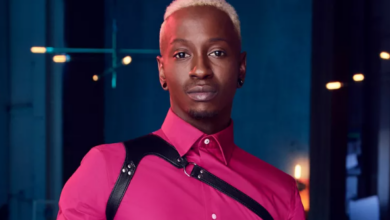
Was Ken Laurence the Most Intimidating Designer Project Runway Ever Cast — or Was He Simply Misunderstood?
Was Ken Laurence the Most Intimidating Designer Project Runway Ever Cast — or Was He Simply Misunderstood?
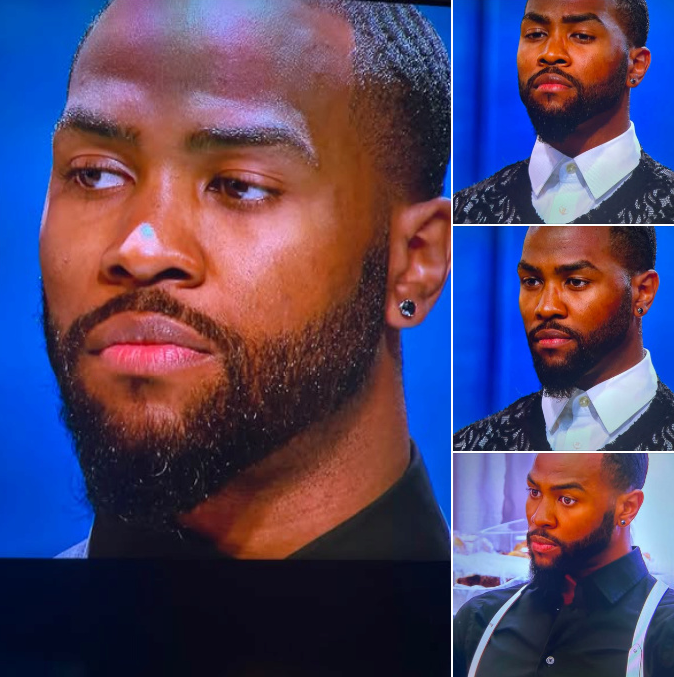
🚨 KEN LAURENCE DIDN’T NEED TO WIN A CHALLENGE TO MAKE THE WORKROOM TREMBLE! 😳🔥 Of all the explosive personalities to walk through the doors of Project Runway, few could change the temperature of a room quite like Ken Laurence. That stare. That silence. That unmistakable “do NOT test me” energy. 😱 One confrontation could suddenly make a fashion competition feel like a psychological thriller! For some viewers, Ken was entertaining television; for others, his anger and confrontational behavior made him one of the most intimidating contestants the franchise ever featured. And although his returns for All Stars Seasons 5 and 6 showed a calmer, more self-aware and arguably redeemed version of the designer, first impressions are difficult to erase. So was Ken actually Project Runway’s ultimate villain — or did reality television amplify the most volatile moments of a talented designer struggling under extraordinary pressure?
Key Takeaways
- 😳 Ken Laurence became memorable not only because of his design talent, but because his intense personality could make confrontations feel genuinely uncomfortable.
- 👀 His famous glare and no-nonsense demeanor gave him an intimidating screen presence that distinguished him from many other Project Runway contestants.
- 💥 His original appearance created a lasting impression that remained difficult for some viewers to shake even years later.
- 🔄 Ken’s appearances on All Stars offered audiences a different perspective, showing greater maturity and self-control.
- 🧵 His evolution raises an interesting question about reality television: should contestants forever be defined by their worst moments, particularly when later appearances demonstrate meaningful personal growth?
Project Runway has given us divas.
It has given us egos.
It has given us designers crying over sewing machines, fighting over fabric and delivering confessionals vicious enough to deserve their own runway.




But then there was Ken Laurence.
Ken possessed something different.
He didn’t necessarily need to scream to make a scene tense.
Sometimes all he needed to do was look at somebody.
That infamous glare could communicate an entire argument before a single word left his mouth.
For viewers who found Ken intimidating, that was precisely what made his original run so unforgettable.
There was always a sense that a relatively ordinary workroom disagreement could suddenly become extremely personal.
And Project Runway is already an environment perfectly designed to test someone’s emotional limits.
Designers are exhausted.
They’re racing against impossible deadlines.
They’re sleeping very little.
Their professional reputations are being judged on national television.
Then producers put them into team challenges — essentially locking stressed-out creative personalities together and asking them to compromise.
What could possibly go wrong?
With Ken, sometimes the answer felt like:
Everything.
His confrontational moments created a fascinating contradiction because Ken clearly wasn’t simply some talentless reality-TV personality cast exclusively to manufacture drama.
The man could design.
That matters.
There was genuine ability underneath the volatility, which arguably made his difficult moments even more frustrating to watch.
You could see someone who had something creatively interesting to offer, yet personality clashes sometimes threatened to become the thing audiences remembered more than the clothes.
And once reality television gives someone a reputation, escaping it becomes incredibly difficult.
A contestant has one enormous confrontation.
The episode previews it repeatedly.
Reaction shots are inserted.
Dramatic music appears.
Suddenly that moment becomes part of the contestant’s permanent television identity.
For Ken, the intimidating image stuck.
The glare became part of the mythology.
So when he eventually returned to the franchise, some viewers probably had one immediate thought:
Oh no. What’s going to happen this time?
But his All Stars appearances complicated that expectation.
This wasn’t necessarily the exact same Ken viewers remembered.
There appeared to be more restraint.
More maturity.
More awareness of how his reactions affected the people around him.
That doesn’t magically erase everything viewers disliked about his earlier behavior.
Nor should anyone be required to suddenly become a fan simply because a contestant shows growth.
But it does make Ken’s Project Runway journey considerably more interesting.
Because reality television rarely gives people the opportunity to rewrite their first impression.
Ken got that opportunity.
More than once.
And his return demonstrated something important: contestants can change.
Perhaps Ken watched himself on television and didn’t like everything he saw.
Perhaps age and experience changed how he handled conflict.
Or perhaps viewers simply got to see more dimensions of a personality that had originally been defined by its most explosive moments.
Whatever the explanation, All Stars made the conversation less simple.
Original Ken could be intimidating.
Later Ken could still possess that enormous personality without allowing every disagreement to explode in the same fashion.
That’s growth.
But here’s the funny thing about first impressions:
Your brain remembers the danger before it remembers the redemption.
So even when Ken returned calmer, some longtime viewers were probably still waiting for the look.
Another designer says something questionable.
Camera cuts to Ken.
Ken slowly turns his head.
And somewhere at home, thousands of Project Runway fans collectively think:
“Don’t do it. Do NOT make eye contact.” 😭
That’s the kind of presence you can’t manufacture.
There have been contestants who created more strategic drama. Others were more openly arrogant. Some delivered nastier comments.
But intimidation is different.
It is about presence.
And Ken could dominate the emotional atmosphere of a scene without needing to dominate the conversation.
At the same time, there’s an important line between discussing how someone came across on television and deciding that’s who they are as a human being.
Project Runway viewers only saw an edited version of contestants living inside an extraordinarily stressful competition.
We can judge what happened on screen.
We can’t necessarily judge everything about the person outside it.
That’s why Ken’s later appearances matter.
They remind audiences that the contestant who frightened or frustrated them during one season doesn’t have to remain frozen in that version of himself forever.
In fact, Ken’s Project Runway story may ultimately be more interesting because of that transformation.
If he’d returned and behaved exactly the same way, viewers would simply say nothing changed.
Instead, his All Stars appearances allowed a different narrative:
Ken Laurence grew up.
Maybe he still had the stare.
Maybe nobody wanted to be standing directly across from him during an argument.
But the designer seemed better equipped to channel his intensity into the competition rather than allowing confrontation to define his entire presence.
And yet…
For viewers who watched that original run?
Some television memories never completely disappear.
You can acknowledge the redemption.
You can respect the growth.
You can even appreciate Ken as a stronger, more mature competitor.
But the second that camera catches that glare again?
😳 Your survival instincts still tell you to grab your sewing kit, quietly leave the workroom and let somebody else finish the argument.