Law Roach on Zendaya, Leaving Fashion & Styling, Project Runway, The Met Coat, Louis Vuitton Drama
Is Law Roach Ready to Leave Styling Behind—and Build a Hollywood Empire Beyond Project Runway?
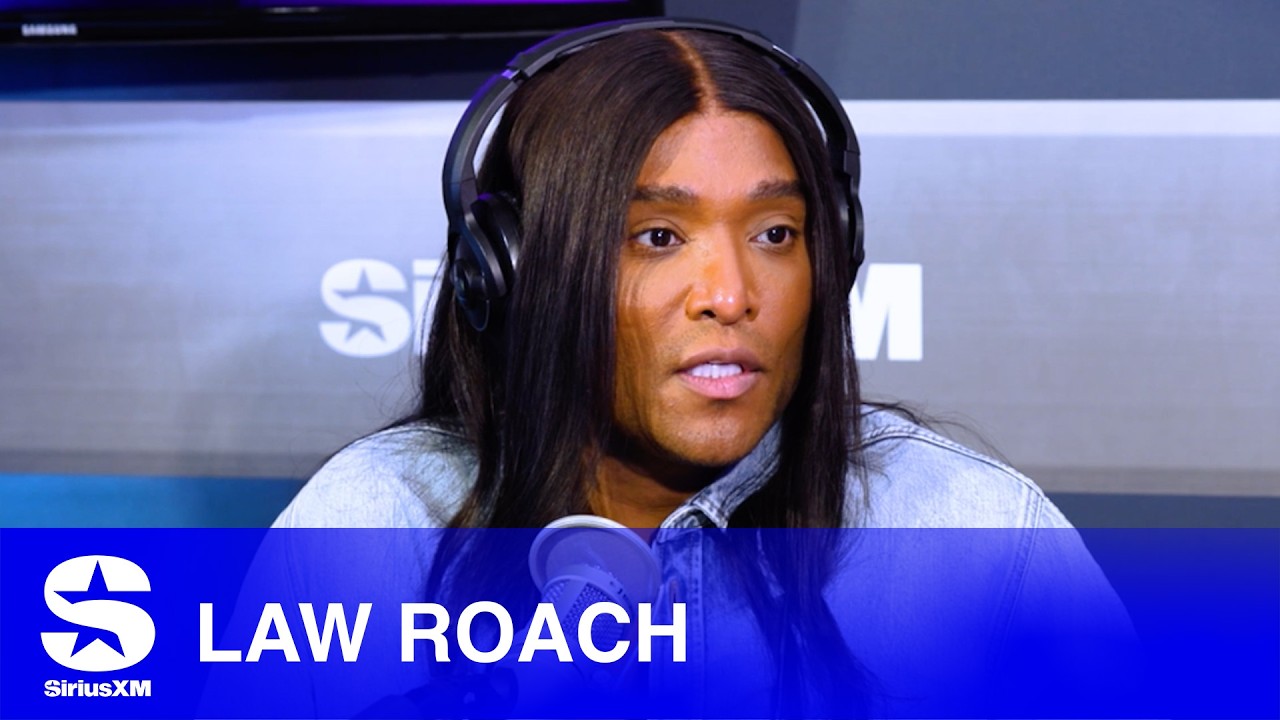
🚨 LAW ROACH HAS CONQUERED FASHION—BUT NOW HE’S ADMITTING THERE MAY BE NOWHERE LEFT TO GO AS “JUST” A STYLIST! 😱🔥 The Project Runway judge and self-proclaimed “most famous stylist in the world” isn’t shrinking himself for anyone anymore. After years of fighting to prove his value in an industry that repeatedly forced him to defend his seat at the table, Law says he returned from retirement with a completely different attitude: if he has to fight just to belong in the room, he doesn’t WANT that room anymore. 💥 But his next confession may be even bigger. Law admits he’s searching for the right TEAM to transform his success into something beyond styling—television, producing, scripted entertainment and an empire built around Law Roach himself. And with Project Runway giving him another enormous platform, could Season 22 actually become the launching pad for the biggest reinvention of his career?
Key Takeaways
- Law Roach says constantly having to fight and prove himself contributed to his decision to retire from celebrity styling.
- Since returning, Law has adopted a new rule: if he has to battle simply to earn respect in a room, he doesn’t need to be there.
- He describes himself as “the Serena Williams of styling” and argues that his global recognition makes him talent in his own right, not merely someone working behind celebrities.
- Law says Project Runway Season 22 features 22 designers—the largest starting cast in the show’s history—and insists the eventual winner absolutely deserved the victory.
- His judging philosophy centers on emotion and storytelling: the clothes must make him “feel something,” and the designer’s explanation must actually match the garment.
- Law believes he has effectively reached the ceiling of traditional styling because becoming “bigger” would simply mean dressing more clients—something he doesn’t want.
- He says his biggest career obstacle now is finding a team capable of understanding and developing every side of his brand.
- Law is open to expanding further into television, including more scripted entertainment, but says he needs people with the vision and tenacity to pursue those opportunities.
- Despite his enormous success, Law continues to describe styling fundamentally as a service job and says that perspective keeps him grounded.
Law Roach knows exactly how successful he is.
And he’s finally reached the stage of his career where he doesn’t feel obligated to apologize for saying it.
During an expansive conversation about fashion, celebrity, Project Runway and his future, Law made one thing unmistakably clear:



He’s done proving that he belongs.
That attitude didn’t appear overnight.
Law describes an industry in which creative professionals—particularly Black creatives—can reach extraordinary levels of success and still feel required to justify their position repeatedly.
For Law, that exhaustion became part of the reason he stepped away from styling.
No matter how big he became, the fight seemingly continued.
Then something changed.
When he returned, Law made himself a promise.
If entering a particular space requires endless arguing, battling and proving his worth?
He simply doesn’t need that space anymore.
That’s a remarkable evolution for someone whose career was built on hustle.
Law recalled moving to Los Angeles to become a stylist in 2014 after working around vintage fashion in Chicago while earning his primary income bartending.
And yes, he still proudly calls himself a hustler.
Not a scammer.
A hustler.
To Law, hustling means entering spaces where you may not have formal training or experience and figuring out how to thrive anyway.
Television became another example.
He didn’t necessarily arrive with a traditional broadcasting background.
He brought personality.
Instinct.
Fashion authority.
And figured it out.
Now Project Runway gives him an ideal arena to combine all of those abilities.
Season 22 launches with 22 designers, something Law described as the largest number of contestants to start a season in the show’s history.
But his standards aren’t exactly forgiving.
When asked how many contestants truly impressed him?
Law’s answer was brutally concise.
Maybe ten.
😂 That’s Law Roach.
And it explains why his judging has become such an important part of the show.
He’s not merely examining whether a garment has been constructed properly.
He wants emotion.
Fashion, in Law’s view, constantly recycles ideas. There may be little that’s completely unprecedented, but there can always be a fresh interpretation.
So when a design walks onto the runway, he wants an immediate reaction.
Could Zendaya wear this?
Could one of his clients wear it to the Oscars?
Could this exist at the Grammys?
Does it create a moment?
Most importantly:
Does the story match the clothes?
Law has little patience for designers delivering elaborate explanations that aren’t reflected in what they’ve actually created.
You cannot describe Diana Ross and send something down the runway that communicates an entirely different fantasy.
The garment has to tell the same story as the designer.
That’s especially important to Law because storytelling has defined his own work.
Zendaya’s red-carpet appearances haven’t simply been beautiful outfits.
They’ve frequently become characters, references, narratives and entire fashion events.
Law understands how powerful clothing becomes when people remember the story surrounding it.
But the most fascinating part of his current Project Runway era may be what happens after it.
Because Law openly acknowledges a career problem most people would desperately love to have.
He’s reached the top.
Where does the world’s most recognizable celebrity stylist go next?
Dress more celebrities?
Take more clients?
Carry more luggage?
Create an even more exhausting schedule?
Law isn’t interested.
“There’s nowhere for me to go,” he explains of styling at this stage, arguing that becoming bigger would essentially require him to dress more people.
That’s not evolution.
That’s simply more work.
So Law wants something different.
Television could be the answer.
He’s already demonstrated range through projects including Legendary, appearances within the RuPaul’s Drag Race universe and now Project Runway.
But he could envision something even larger.
When the possibility of a television project loosely centered around his life—but using actors and scripted storytelling rather than conventional reality television—is raised, Law appears receptive to the concept.
There’s only one major obstacle.
The team.
Law admits this may currently be his biggest professional hurdle.
He’s spent years creating opportunities for himself.
But building the next stage requires people who understand that “Law Roach” is no longer a job description.
It’s a brand.
Stylist.
Television personality.
Judge.
Producer.
Fashion authority.
Storyteller.
Celebrity in his own right.
Law needs someone who understands how all those pieces fit together—and, crucially, someone willing to chase opportunities after the initial meeting ends.
Who follows up?
Who fights for the project?
Who walks into Hollywood rooms and explains that Law cannot simply be categorized as another reality personality or stylist?
That’s the person he’s searching for.
And perhaps that’s why his comments about fame feel particularly important.
Law directly pushes back against the old criticism that stylists aren’t “the talent.”
In his case, he believes he is.
He compares his position within styling to Zendaya’s stature within her world and eventually offers an even more unforgettable comparison:
“I am the Serena Williams of styling.”
That isn’t empty confidence.
Law points to the work.
The recognition.
The doors he has opened.
The fact that people around the world recognize not merely his clients but him.
Yet there is an interesting contradiction at the center of Law Roach.
He can call himself the Serena Williams of styling while simultaneously describing his profession as a service job.
He still remembers tying shoes.
Packing bags.
Moving luggage.
Working behind the scenes to make someone else look extraordinary.
To him, styling isn’t fundamentally different from other service professions simply because his workplace happens to include couture and red carpets.
That perspective may explain how Law can possess enormous confidence without pretending success guarantees permanence.
He knows fashion can replace people.
Hollywood can replace people.
One extraordinary season doesn’t guarantee the next.
So he continues moving.
And his fashion archive demonstrates that he’s also thinking increasingly about legacy.
One of his most extraordinary possessions is an André Leon Talley Christian Dior haute couture coat personally made for Talley by John Galliano.
Law says he spent around $50,000 obtaining it after a remarkable series of events involving the original auction buyer, Talley’s estate and even the Metropolitan Museum of Art.
For Law, owning the coat isn’t merely about possessing something expensive.
He wears it.
He gives it another life.
He feels connected to the history it represents.
That’s ultimately what makes his next career move so intriguing.
Law Roach has already helped create fashion history for other people.
Now he appears increasingly interested in building something that belongs entirely to him.
Project Runway could therefore represent much more than another television credit.
It allows audiences to see Law’s personality, expertise, humor, confidence and storytelling instincts without requiring a celebrity client to stand in front of him.
The stylist is becoming the star.
And Law clearly believes there’s much more ahead.
He even admits to possessing what he jokingly calls the necessary “delusion” to believe he can do anything.
Perhaps that’s exactly what his next chapter requires.
Because Law Roach doesn’t need another celebrity wardrobe to prove he’s one of fashion’s most influential figures.
He’s already done that.
The bigger question is whether Hollywood finally recognizes what he appears ready to become:
not simply the man creating the stars’ biggest moments—but the star at the center of his own empire.