Is Willow Rewriting Her Marriage to Michael — or Is Her Identity Crisis Pushing Her Toward a Complete Breakdown?
Is Willow Rewriting Her Marriage to Michael — or Is Her Identity Crisis Pushing Her Toward a Complete Breakdown?
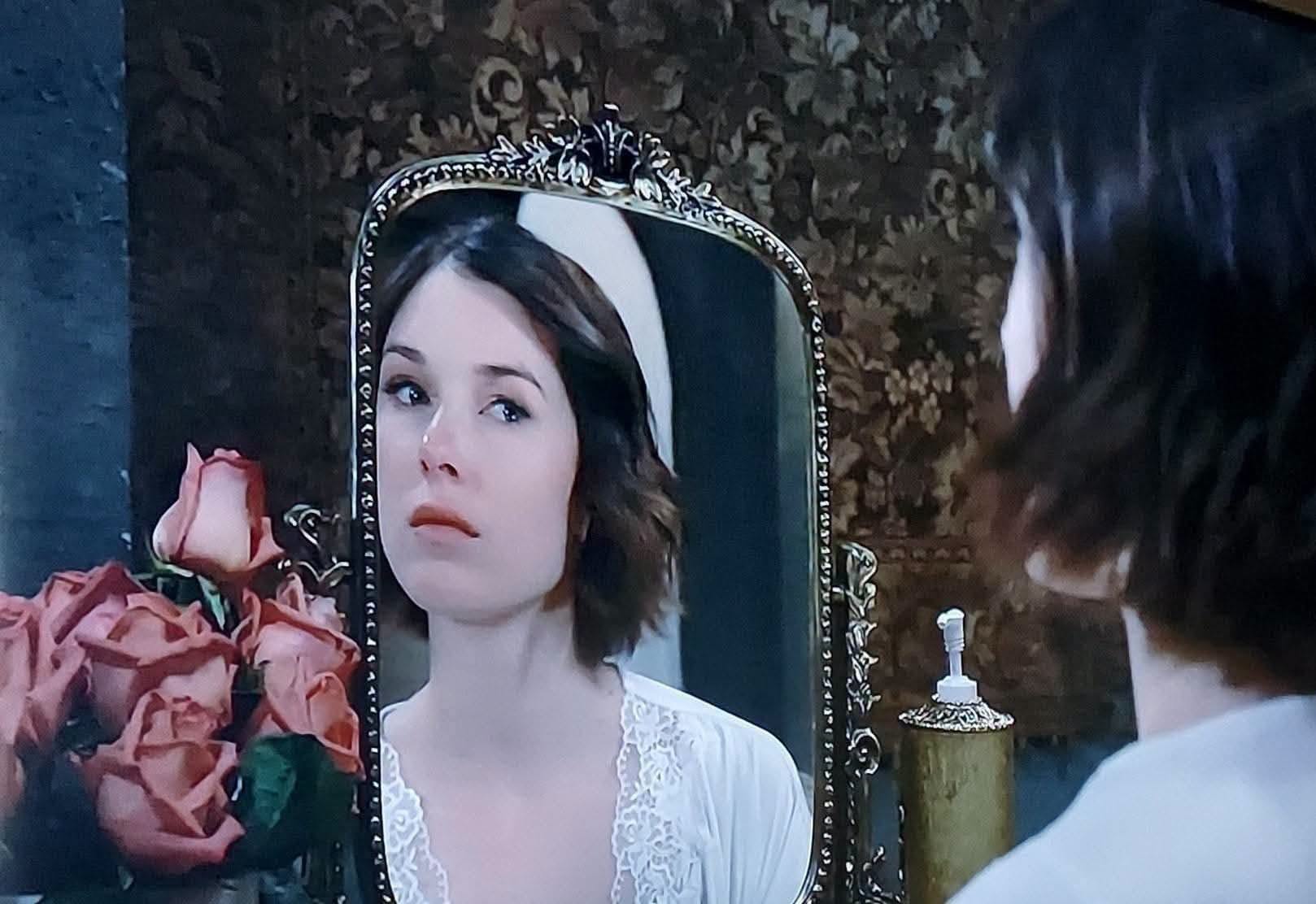
🚨 WILLOW’S VERSION OF THE PAST IS CHANGING — AND THAT MAY BE THE BIGGEST WARNING SIGN YET! 😱💔 Willow is now telling Chase that she was NEVER truly accepted by the Quartermaines and portraying Michael as a controlling husband who prevented her from having a voice. But longtime viewers may remember those relationships very differently. Michael repeatedly supported Willow through enormous changes in her life, while the Quartermaines welcomed her into a complicated family that certainly wasn’t perfect — but wasn’t necessarily the hostile prison Willow now describes either. So why does Willow NEED to see her past this way? The answer could be far more troubling than simple bitterness. After years of changing families, relationships, names and identities, Willow may no longer know exactly who Willow is without a man or family defining her. And until she confronts that question, every person who once loved her could become another villain in the story she is rewriting to survive.
Key Takeaways
- 🧠 Willow’s conversations with Chase suggest she is increasingly reframing her past in ways that support her current emotional narrative.
- 💔 Willow claims Michael controlled her and that she was never truly accepted by the Quartermaines, although her history with them was considerably more complicated than that description suggests.
- 🔄 Her repeated shifts between families, relationships and identities could point toward the deeper question of whether Willow has ever developed a stable sense of herself.
- ⚠️ Blaming Michael for everything that went wrong may temporarily protect Willow from confronting her own choices, but it could ultimately intensify her downward spiral.
- ❤️ Chase could become important not by validating every version of Willow’s past, but by challenging her to finally determine who she is independent of Michael, Drew or anyone else.
Willow has started telling a very different story about her marriage.
And perhaps the most fascinating question isn’t whether every detail of that story is accurate.
It’s why Willow needs to believe it now.




Her conversation with Chase reveals a woman increasingly convinced that she spent years trapped inside a life that never truly belonged to her.
According to Willow, she was never genuinely accepted into the Quartermaine family.
Michael controlled her.
Her opinions didn’t matter.
Her desires came second.
In Willow’s current version of events, she wasn’t Michael’s equal partner.
She was someone gradually swallowed by the Corinthos-Quartermaine machine.
But there is a problem.
That’s not necessarily how everyone else remembers it.
Michael certainly made mistakes. Their relationship experienced enormous pressures, and nobody should pretend their marriage was perfect.
But Michael also supported Willow through some of the most difficult periods of her life.
He encouraged her.
He protected her.
He stood beside her through illness, motherhood and family chaos.
There were many moments when Willow possessed agency and made her own decisions.
The Quartermaines were similarly complicated.
Being welcomed into that family doesn’t mean every relationship was peaceful. The Quartermaines can turn breakfast into a corporate coup before the coffee is cold.
But Willow wasn’t simply treated as an unwanted outsider every second she spent among them.
So when Willow now describes her entire experience as rejection and control, Chase may eventually begin wondering whether he’s hearing history…
or Willow’s emotional reconstruction of history.
That distinction matters.
People sometimes reinterpret old relationships after those relationships collapse. Moments once considered loving begin looking manipulative. Compromises begin feeling like sacrifices. Arguments that seemed temporary become evidence that everything was always wrong.
Willow may be doing exactly that.
Because if Michael was always controlling, then Willow doesn’t have to confront some uncomfortable questions about her own decisions.
If the Quartermaines never accepted her, she doesn’t have to grieve losing them.
If her marriage was always fundamentally broken, then choices she made afterward become easier to justify.
It’s emotionally convenient.
But convenience isn’t necessarily truth.
And Chase could become the person who notices the contradictions.
Initially, Chase may sympathize.
He has loved Willow before.
He knows how vulnerable she can become when she feels abandoned or misunderstood.
But Chase also knew Michael and Willow as a couple.
Eventually, Willow could make a claim that simply doesn’t match something Chase personally witnessed.
He pauses.
Willow notices.
“You don’t believe me?”
That’s when everything changes.
Because Willow may not actually want Chase to objectively analyze her history.
She may need him to validate it.
And if he doesn’t?
Chase could suddenly become another person who “never understood” her.
That pattern would reveal something much deeper than lingering anger toward Michael.
Willow’s real battle may be with herself.
Consider how many identities she has carried.
Willow Tate.
A woman escaping the psychological damage of Dawn of Day.
A teacher.
Chase’s wife.
Michael Corinthos’ partner.
A mother.
A woman pulled into the Quartermaine orbit.
Someone repeatedly discovering shocking truths about her biological family.
Every transformation has required Willow to redefine herself around another relationship or revelation.
So strip all those labels away.
Who remains?
Who is Willow when nobody else gets to provide the answer?
That may be the question she has avoided for years.
And Drew potentially complicated that identity crisis rather than solving it.
What Willow experienced with Drew could initially have felt like liberation.
Someone saw her differently.
Someone awakened feelings she’d suppressed.
Suddenly she wasn’t simply Michael’s wife or Wiley’s mother.
She felt desired as an individual.
But feeling different isn’t necessarily the same thing as discovering yourself.
Willow may simply have exchanged one identity for another.
That’s why her anger toward Michael could continue escalating.
The more unstable her current life becomes, the more desperately she may need her old life to have been terrible.
Otherwise she must confront a frightening possibility:
What if Michael wasn’t responsible for everything?
What if Willow participated in destroying something that once genuinely mattered to her?
That realization could send her spiraling even further.
She could lash out at Michael.
At Carly.
At the Quartermaines.
Perhaps even at Chase when he refuses to reinforce every accusation.
And Michael may eventually reach his limit.
Imagine Willow confronting him and accusing him of never allowing her to make her own decisions.
Michael listens.
Then quietly reminds her of the moments when he supported choices he didn’t necessarily agree with because he believed they were hers to make.
Willow becomes furious.
Not necessarily because Michael is wrong.
Because his memories threaten the version of history she currently needs.
But this storyline doesn’t have to end with Willow being treated as a villain.
It could become the beginning of something far more interesting:
Willow finally getting help.
Not help designed to reunite her with Michael.
Not therapy intended to prove Drew manipulated her.
Not another romantic partner arriving to rescue her.
Real help centered entirely around Willow discovering herself.
She needs to examine the trauma she survived before arriving in Port Charles, the instability surrounding her biological family, the relationships that shaped her and the decisions she made when she desperately wanted somewhere to belong.
Only then could she begin separating three different things:
What actually happened.
How those experiences made her feel.
And what she tells herself about them now.
Michael doesn’t need to become a saint for Willow’s current narrative to be questionable.
The Quartermaines don’t need to become perfect.
And Willow doesn’t need to become evil.
She can simply be lost.
That may ultimately make the storyline far more powerful.
Because Willow has spent years becoming somebody’s daughter, somebody’s wife, somebody’s mother and somebody’s lover.
Maybe her next story shouldn’t be about which man she chooses.
Maybe it should begin with one brutally simple question:
Who is Willow Tate when she finally stops defining herself through everyone else?